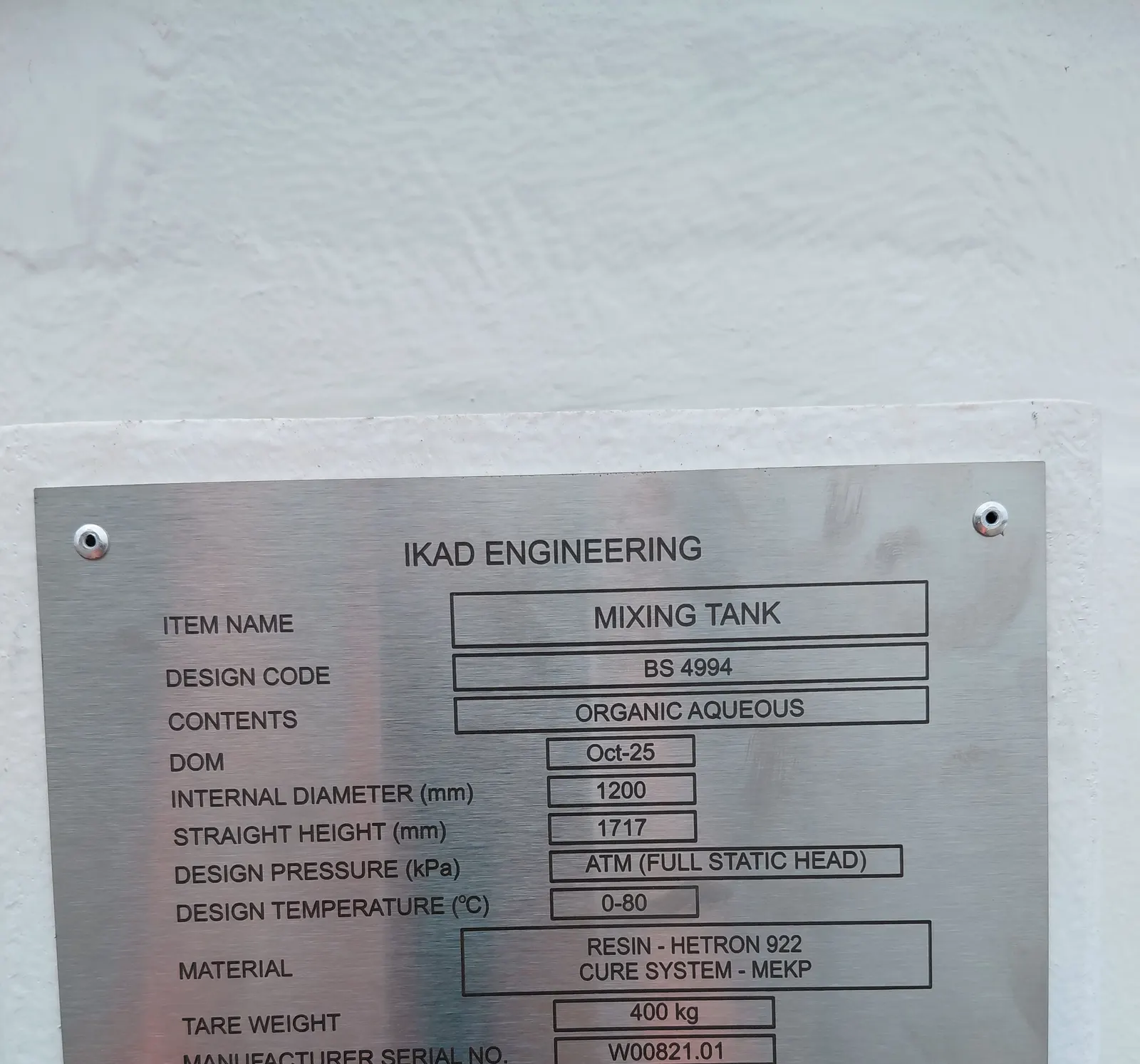
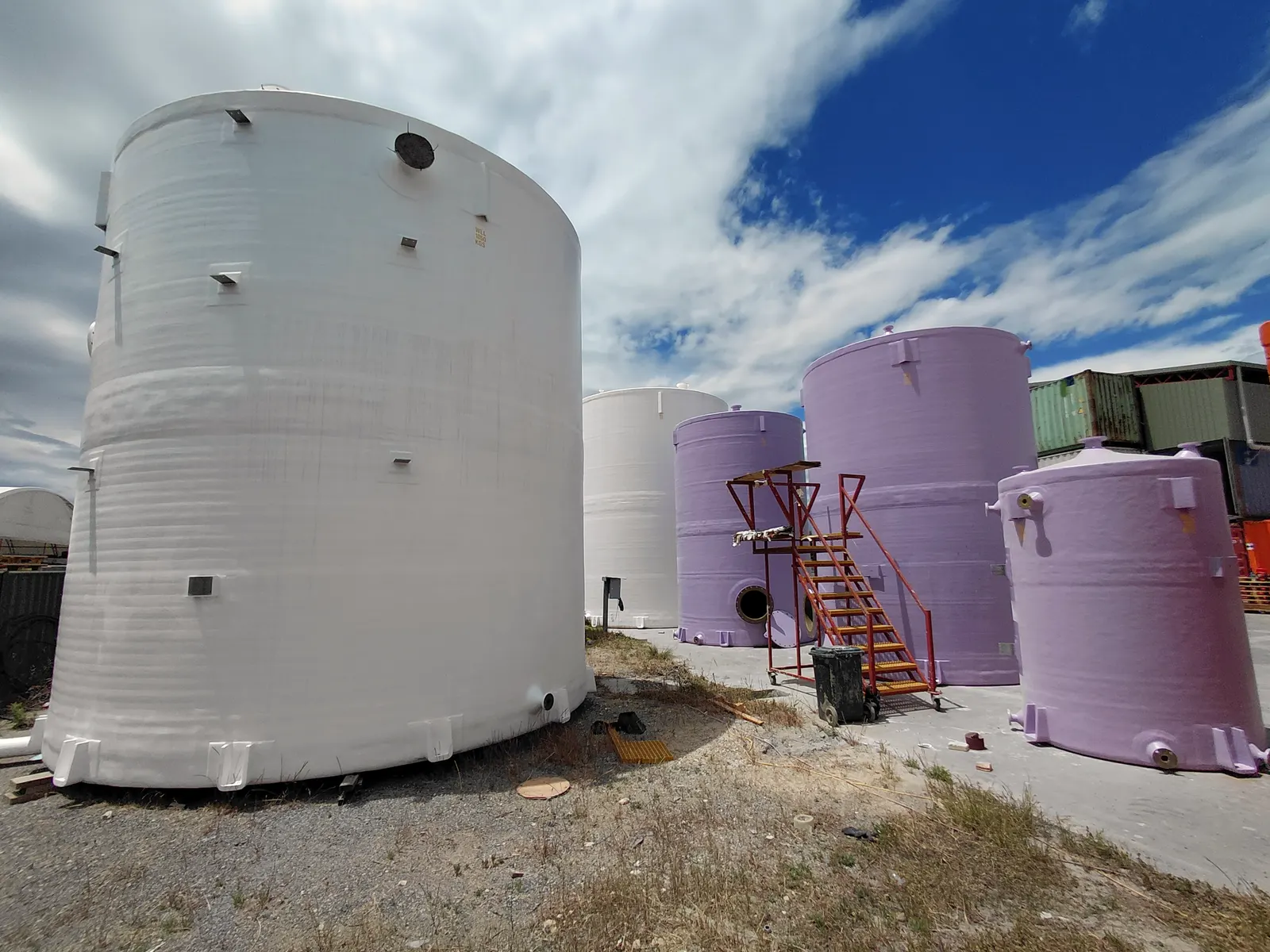
Fibreglass resists corrosion, stays watertight and can be built to almost any tank layout. These are the reasons we use it for chemical storage.
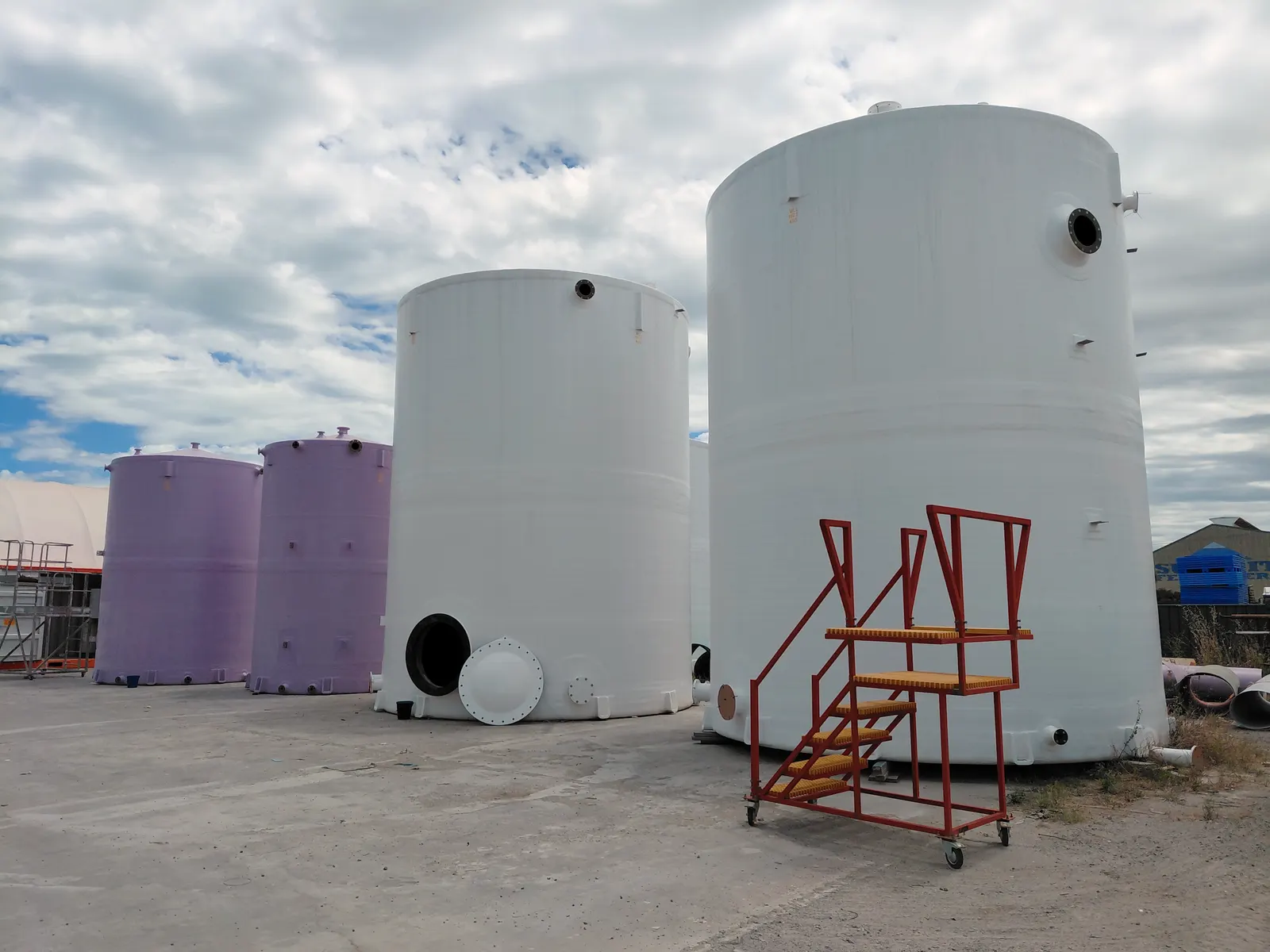
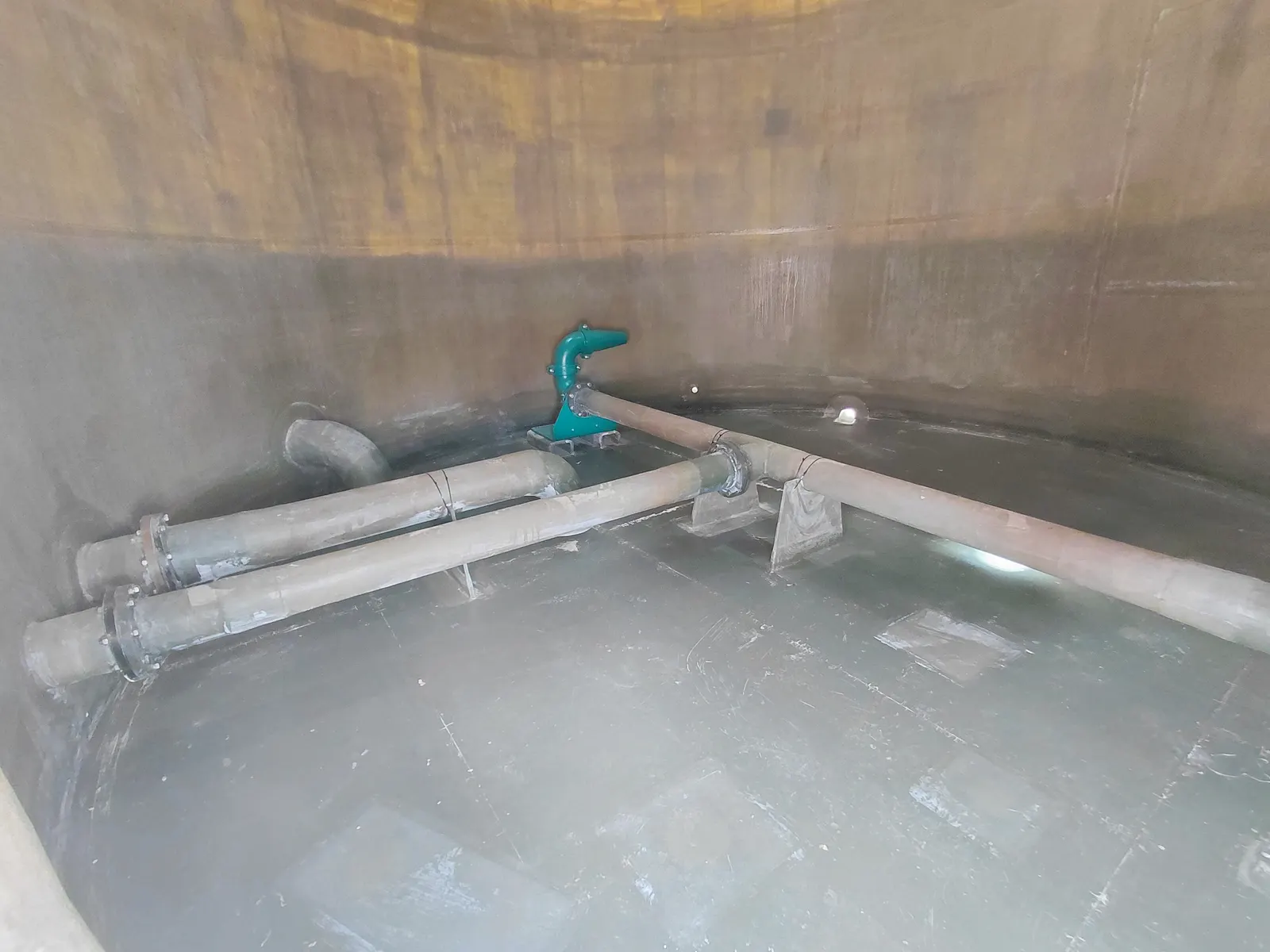
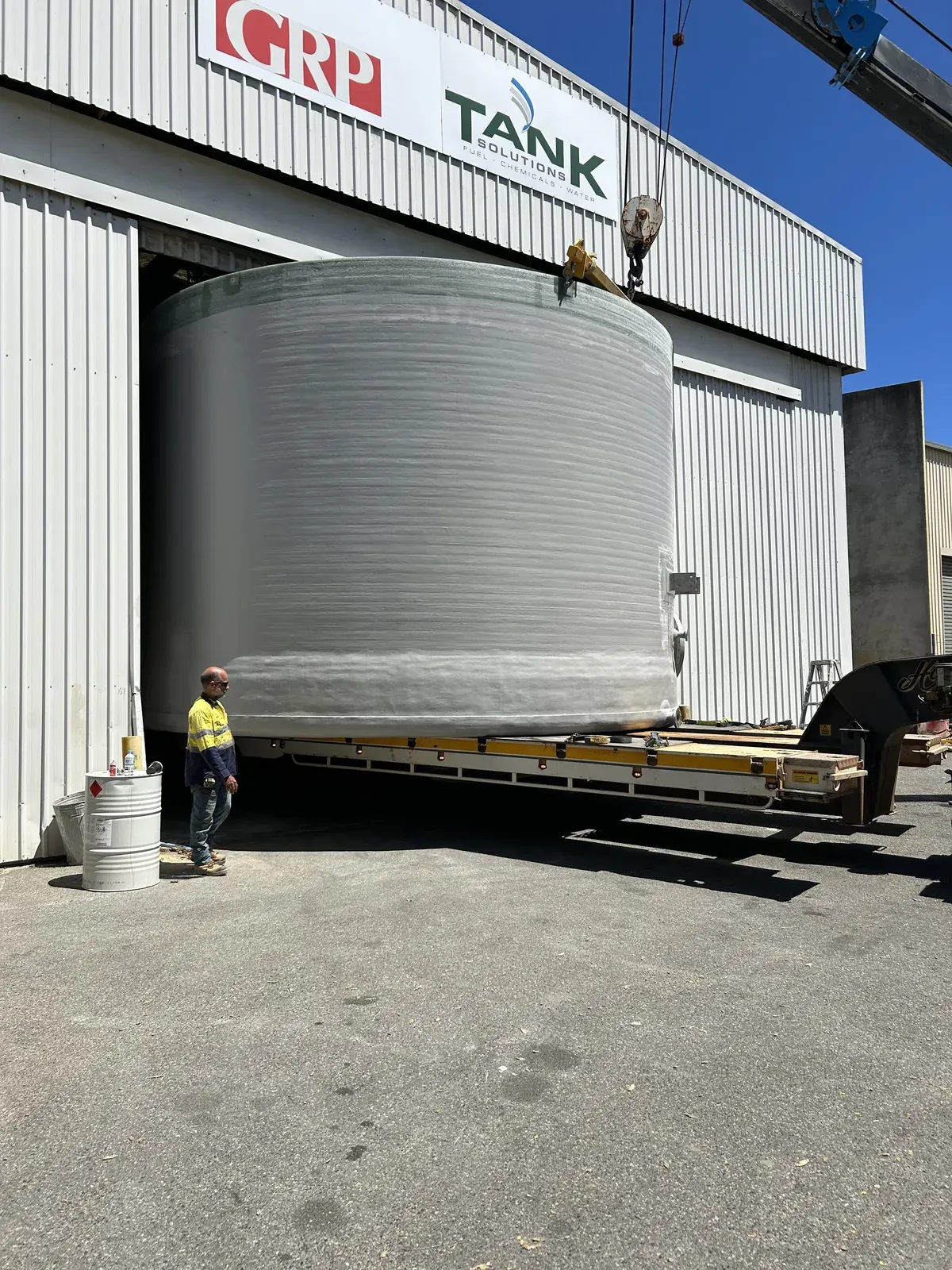
Built as one sealed unit with factory-made penetrations and no joints to seal on site. Nothing leaks out, and nothing gets in to dilute the product.
We select the resin system for the chemical and its concentration, using resins from major resin manufacturers.
The smooth resin-rich inner surface makes it hard for solids to stick, which cuts wash-downs and downtime.
Designed and certified by a practising composite materials engineer, with drawings approved by you before manufacture.
Delivered complete. On site it only needs pipework and electrical connections, which avoids much of the hazardous fit-out work.
Brackets and mounting plates are glassed on rather than drilled through, so the tank stays watertight.
A pure resin surface layer is smooth and strong, so it stands up to abrasive duty.
Nozzle sizes, materials and layout are set for your process and maintenance needs.


WHS legislation makes everyone involved in a project responsible for site safety, including those who supervise and design it. Because FRP units arrive complete and only need connecting, they reduce the hazardous work needed on site and support a safer workplace.
Before manufacture, project-specific working drawings are produced and sent to you for approval. Each unit is then checked at stages of manufacture against those drawings.
Fibreglass (fibre reinforced plastic) was first developed in the 1930s. After the Second World War its strength and low weight made it valuable to the aerospace industry, and by the mid-1950s its corrosion resistance was being used for pipes carrying sewage and trade waste.
In 1958, FRP pipes went into service at timber treatment plants in British Columbia, Canada. Since then FRP has been used extensively for wastewater and chemical storage around the world.
Compare the cost of replacing an ageing tank on your own schedule with the cost if it fails in service.
Compare the costsCheck the resin makers' ratings for your chemical, concentration and temperature, and get a spec to send us.
Build your specEight questions about what you store and where it goes, and the tank type that fits.
Take the quizYes. It is built as one sealed unit with factory-made penetrations and no joints to seal on site, so nothing leaks out and nothing gets in to dilute the product.
We select the resin system for the chemical and its concentration, using resins from major resin manufacturers.
Each tank is designed and certified by a practising composite materials engineer. Project drawings are sent to you for approval before manufacture, and each unit is checked against them at stages of manufacture.
Yes. Brackets and mounting plates are glassed on rather than drilled through, so the tank stays watertight.
Tell us the chemical, its concentration and temperature, and the volume you need. We reply within 2 business days.
Or call 08 9434 1707 (WA) · 02 4964 8270 (east coast)